

Gene Editing

Do you or someone you know have High Cholesterol?
Qualified volunteers may receive at no cost:
-
Investigational medications
-
Study-related medical care from a qualified doctor
-
Possible compensation for time and travel
No health insurance is required to participate in our studies.
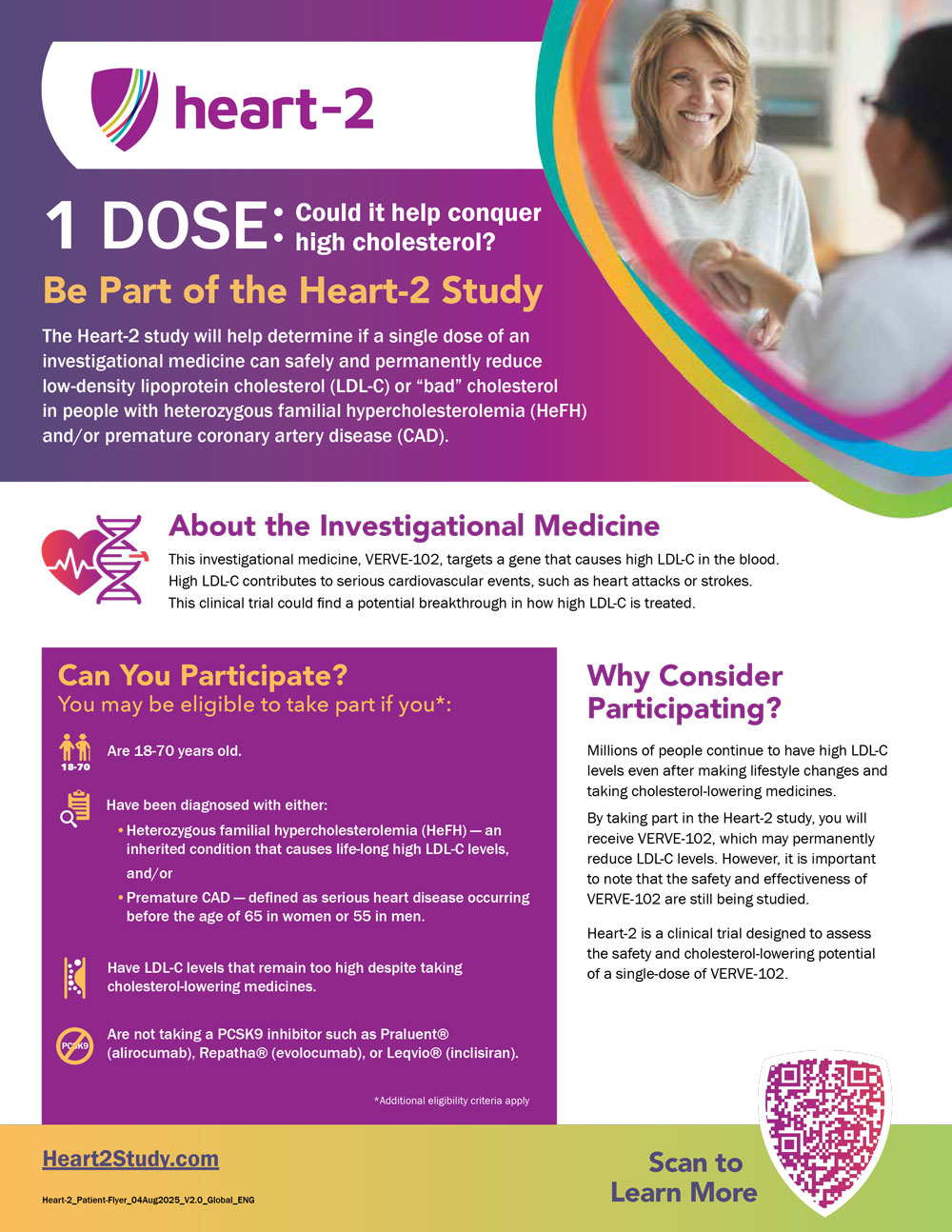
- Jacksonville: University Blvd – HeFH/CAD – Heart-2
- Jacksonville: University – Dyslipidemia (Cholesterol)
- Jacksonville: University Blvd – High Cholesterol/Triglycerides – CRSP400

Gene Editing Research for High Cholesterol
Advancing Cholesterol Care Through Gene Editing Research
Do you have high cholesterol that has been difficult to control despite treatment? You may qualify for a research study exploring a new approach to managing cholesterol through gene editing.
At Jacksonville Center for Clinical Research, we are committed to advancing heart health through cutting-edge clinical research—and you could play an important role.
About the Study
This research study is a Phase 1, first-in-human clinical trial evaluating an investigational gene-editing therapy for individuals with dyslipidemia that has not responded to available treatments.
The study is open-label and multicenter, meaning participants will receive the study treatment, and the trial is being conducted at multiple research locations. This is a single-arm study, so all participants will receive the investigational therapy.
Who May Qualify?
You may be eligible to participate if you:
✅ Are 18 to 75 years of age
✅ Have been diagnosed with persistent dyslipidemias
✅ Have been on standard cholesterol medications for at least 12 weeks, but levels are still not well controlled.
Participants will receive study-related care at no cost, and no insurance is required. Compensation is available for qualified participants.
CRISPR Gene Editing Research Study for Refractory Dyslipidemias
Testing investigational CRISPR gene editing treatment for adults with high cholesterol and/or triglycerides that don’t respond to standard medications
If you have high cholesterol and/or triglycerides that don’t respond to medications, you may be eligible for a groundbreaking gene editing research study. This study is testing an investigational CRISPR gene editing treatment for adults ages 18-75 with refractory dyslipidemias (high cholesterol and/or triglycerides that remain elevated despite maximum tolerated doses of lipid-lowering medications).
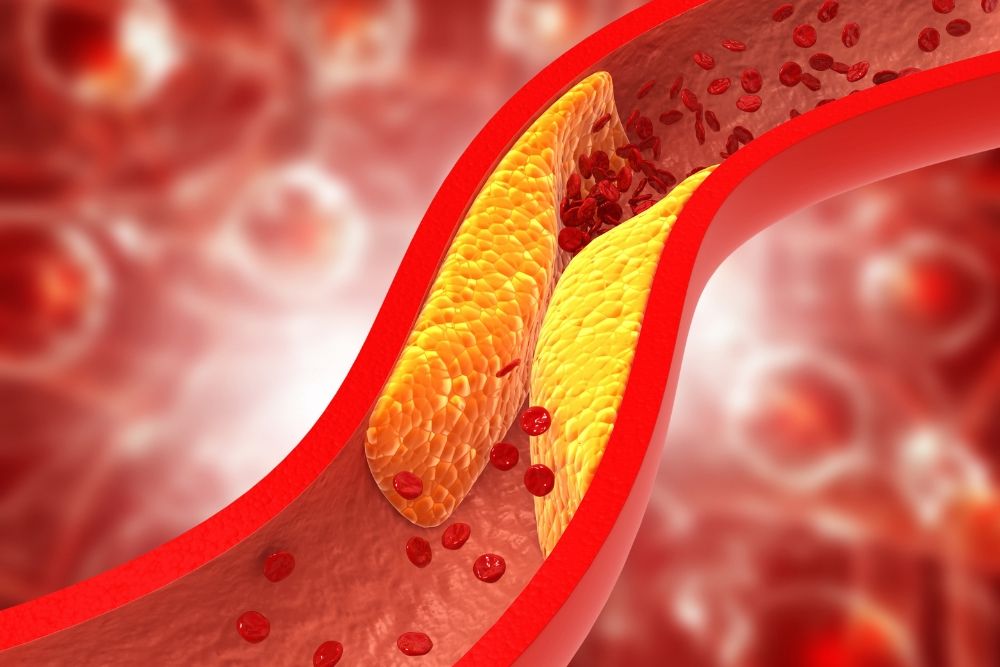
Dyslipidemias are conditions characterized by abnormal levels of lipids (fats) in the blood, including high cholesterol (LDL-C, non-HDL-C, apolipoprotein B) and high triglycerides. These conditions significantly increase the risk of heart disease, stroke, and other cardiovascular complications. For most people, lifestyle changes combined with medications such as statins, ezetimibe, PCSK9 inhibitors (alirocumab or evolocumab), fibrates, omega-3 fatty acids, bile acid sequestrants, bempedoic acid, lomitapide, or inclisiran can effectively lower cholesterol and triglycerides to target levels recommended by the American College of Cardiology and American Heart Association. However, some people have refractory dyslipidemias, meaning their cholesterol and/or triglycerides remain dangerously elevated despite trying multiple medications at maximum tolerated doses for at least 12 weeks. This includes people with genetic conditions like familial hypercholesterolemia (inherited high cholesterol due to gene mutations) and severe hypertriglyceridemia (very high triglycerides often >500 mg/dL).
This is a first-in-human Phase 1 study evaluating the safety and tolerability of CTX310, an investigational CRISPR gene editing treatment. CRISPR (Clustered Regularly Interspaced Short Palindromic Repeats) is a revolutionary gene editing technology that can make precise changes to DNA. CTX310 uses CRISPR-Cas9 technology delivered in a lipid nanoparticle formulation to edit the ANGPTL3 (angiopoietin-like 3) gene in the liver. By disrupting this gene, CTX310 is designed to permanently decrease ANGPTL3 protein levels, which in turn may result in long-lasting reductions in cholesterol and triglycerides. Unlike daily pills or regular injections that require ongoing treatment, this is a single IV infusion that could potentially provide lasting benefits from a one-time treatment.
The study has two phases. Phase 1a (dose escalation) is enrolling people with various types of refractory dyslipidemias including multifactorial chylomicronemia syndrome, familial hypercholesterolemia, familial chylomicronemia syndrome, and other high cholesterol/triglyceride conditions to determine the optimal dose. Phase 1b (disease-specific cohort expansion) is enrolling people in four specific groups: (1) Severe hypertriglyceridemia (triglycerides >500 mg/dL), (2) Homozygous familial hypercholesterolemia (HoFH – two copies of gene mutation), (3) Heterozygous familial hypercholesterolemia (HeFH – one copy of gene mutation), and (4) Mixed hyperlipidemias (including moderate hypertriglyceridemia).
The study involves a single IV infusion of CTX310 administered at the study site. You will be hospitalized for a minimum of 24 hours after the infusion for safety monitoring. You will then be monitored for 12 months with regular clinic visits to assess safety, measure changes in your cholesterol and triglyceride levels, and evaluate the effects of the gene editing. All participants will be invited to enroll in a separate long-term follow-up study for up to 15 years to track the durability and long-term safety of the treatment.
Important: You must have high cholesterol and/or triglycerides that remain elevated despite being on maximum tolerated doses of lipid-lowering medications for at least 12 weeks before screening. You must continue taking your current lipid-lowering medications during the study. Females must be postmenopausal (no females of childbearing potential can participate due to unknown effects on pregnancy). Males must use effective contraception for 12 months after the infusion. You cannot have had prior gene therapy or gene editing treatment. You cannot have liver disease, kidney disease, recent heart attack (within 24 weeks), recent stroke (within 24 weeks), recent pancreatitis (within 12 weeks), HIV, Hepatitis B, Hepatitis C, or cancer within the past 5 years (with some exceptions for completely resected skin cancers). Study-related care, tests, and investigational treatment are provided at no cost. Compensation is provided.
You may qualify if you:
- Are between 18 and 75 years old
- Have high cholesterol (LDL-C, non-HDL-C, and/or ApoB) and/or high triglycerides above recommended levels
- Have cholesterol and/or triglycerides that remain elevated despite being on maximum tolerated doses of lipid-lowering medications for at least 12 weeks
- Are currently taking lipid-lowering medications such as statins, ezetimibe, PCSK9 inhibitors, fibrates, omega-3 fatty acids, bile acid sequestrants, bempedoic acid, niacin, lomitapide, or monoclonal antibodies
- Are willing to continue taking your current lipid-lowering medications during the study
- Are on a stable dose of lipid-lowering medications with no planned dose increase during study participation
- If on apheresis (blood filtering for cholesterol removal): Have been on stable frequency for at least 12 weeks with no planned changes
- If on inclisiran: Have been on it for at least 365 days and it has not adequately controlled your lipid levels
- For females: Are postmenopausal (at least 12 months without period, OR surgically sterile with hysterectomy and/or removal of ovaries/fallopian tubes)
- For males: Are willing to use effective contraception for 12 months after the infusion, and your female partner will also use effective contraception
- Are willing to be hospitalized for at least 24 hours after the infusion
- Are willing to attend all study visits over 12 months
- Are willing to enroll in long-term follow-up study for up to 15 years
- For Phase 1b disease-specific cohorts: Have severe high triglycerides (>500 mg/dL), HoFH, HeFH, or mixed hyperlipidemias
- Fleming Island
- Jacksonville Borland Groover
- Jacksonville University Blvd.
- Jacksonville Westside
- Nature Coast – Crystal River
- Nature Coast – Inverness
- St. Augustine
This research study is enrolling at:
Jacksonville Center for Clinical Research
4085 University Blvd., South
Suite 1
Jacksonville, FL 32216
(904) 730-0166
Fleming Island Center for Clinical Research
1679 Eagle Harbor Parkway
Suite D, 2nd Floor Fleming Island, FL 32003
(904) 621-0390
Jacksonville Center for Clinical Research
4085 University Blvd., South
Suite 1
Jacksonville, FL 32216
(904) 730-0166
St. Johns Center for Clinical Research
100 Whetstone Place,
Suites 300 – 301,
St. Augustine, FL 32086
(904) 209-0043
ENCORE Borland Groover Clinical Research
4800 Belfort Road, Suite 301
Jacksonville, FL 32256
(904) 680-0871
Nature Coast Clinical Research – Inverness
411 West Highland Boulevard
Inverness, FL 34452
(352) 341-2100
Nature Coast Clinical Research – Crystal River
6122 West Corporate Oaks Drive
Crystal River, FL 34429
(352) 861-1865
Sign up below to join our research studies and make a difference!
Read the latest posts by our expert clinical staff!


- Category
- Jacksonville (University Blvd.)